Tag Archive for: cavities

How Does a Root Canal Work?

Root canals have a bad reputation that’s decades out of date. When root canal treatment first became common, it really was uncomfortable, but the procedure has changed dramatically since then.

The reputation, unfortunately, hasn’t caught up. A survey by the American Association of Endodontists found that patients who’ve actually had a root canal are six times more likely to describe it as painless than those who haven’t had one. More than 15 million teeth are saved every year with root canal treatment.

From our team at Dr. Chauvin’s dental office in Lafayette, Louisiana, here’s what you actually need to know.

Start With the Anatomy of Your Tooth

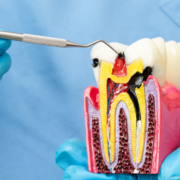
Understanding why a root canal is sometimes necessary starts with understanding what’s inside your tooth. Beneath the hard white enamel and a second hard layer called dentin is a soft tissue called the pulp. The pulp contains blood vessels, nerves, and connective tissue, and it plays an important role in helping your tooth’s root grow during development. In a fully developed tooth, however, the tooth can actually survive without the pulp — because it continues to be nourished by the surrounding tissue. That’s what makes a root canal possible.

Why Would You Need a Root Canal?

Once the pulp becomes infected, it needs to be removed in order to save the tooth. There are several ways this can happen. The most common is an untreated cavity that allows bacteria to work their way deep into the tooth. A crack or chip in the tooth can open the same door. Failing restorations — like an old filling or a worn crown — can also allow bacteria to leak into the pulp over time.

Once infected, the pulp begins to die, and the body’s inflammatory response kicks in. The combination of infection and inflammation is what causes the significant pain most people associate with a root canal. The root canal treatment itself isn’t the source of the pain — it’s the solution to it.

Signs You Might Need a Root Canal

Not sure if what you’re experiencing warrants a call to the dentist? Here are some common indicators:

  • Hot or cold food or drinks cause a toothache or lingering sensitivity
  • Chewing is painful or difficult
  • Your tooth is sore to the touch
  • You have a severe or throbbing toothache
  • There’s a bump on your gum, possibly filled with pus
  • Pain that radiates from one part of your mouth to another, or into your head or ear

If any of these sound familiar, it’s worth getting checked out sooner rather than later.

What Does the Root Canal Procedure Actually Involve?

Root canal therapy is a detailed procedure that requires both skill and experience, and it often takes more than one visit to complete. Here’s what the process typically looks like:

  1. X-ray and anesthesia: The first step is taking an X-ray to assess the shape of the root canals and check for any signs of infection in the surrounding bone. Local anesthesia is then used to numb the area — so while root canals have a scary reputation, you should be comfortable throughout the procedure.
  2. Cleaning and shaping the canal: A small opening is made through the enamel and dentin to access the pulp. Using flexible nickel titanium files, Dr. Chauvin carefully shapes the inside of the canal, thoroughly removing all traces of infection and debris while minimizing any impact on the surrounding ligaments and bone.
  3. Disinfecting and sealing: Once the canal is clean, it’s disinfected and sealed using a material called gutta-percha — a natural, biocompatible, antibacterial material that is heated and used to fill and seal the hollowed space within about 15 minutes. If the procedure spans more than one appointment, a temporary filling is placed to keep contaminants out between visits.
  4. Final restoration: Because a tooth that needs a root canal has often already experienced significant decay or damage, a crown or other restoration is typically placed once the root canal is complete. This protects the tooth, prevents it from breaking, and restores it to full function.

Ready to Stop Living With Tooth Pain?

If you’re experiencing any of the symptoms above or think you might need a root canal, don’t put it off. The earlier a tooth is treated, the better the outcome. Give Dr. Chauvin’s Lafayette, Louisiana dental office a call today. We’ll make sure you’re comfortable every step of the way.

3 Things Young Teeth Need in Moderation

young teeth dr chauvin lafayette la dentistIt can be said that with most things in life – diet, exercise, guilty pleasures – moderation is the key, and this too applies as we talk about your baby’s or children’s teeth.

What do we mean by that?

Specifically, when we look at sugar intake, teeth brushing practices, and toothpaste, we want to be sure we’re making the correct and moderate choices, since these will ensure healthy adult teeth for your children. Damage to baby teeth can cause children to have dental problems later on in their adult lives, so it’s important to start good dental practices early on.

3 Things Young Teeth Need in Moderation

  • Sugar Intake

Eating sugary foods can cause tooth breakdown and decay over time and gives bacteria ample opportunity to multiply within your child’s mouth. Sugar is the main reason that almost half of children under the age of 11 experience tooth decay, and it’s easy to see why: sugar can creep in through not only obvious food items like soft drinks and ice cream, but also through milk, juice, and dried fruit.

It can be tempting to give in to your child’s demands for sugary snacks and candy, especially with Halloween right around the corner, but try to have healthy alternatives for drinks and snacks on hand. Keep an eye out especially for sticky foods.


  • Teeth Brushing

Before your baby’s teeth come in, you can gently wipe gums after feedings with a damp, clean washcloth to remove bacteria. Once the first teeth come in, you can still use a washcloth to remove plaque or you can use a soft-bristled baby toothbrush to brush the tooth with a small smear of baby toothpaste.

Be very gentle so you don’t irritate gums and remember that teething is an uncomfortable time, so be careful with your baby’s sensitive gums and mouth. Once your child gets older, you can introduce them to their toothbrush and let them hold it, but stress the importance of thoroughly and patiently brushing their teeth.


  • Toothpaste

There are varying recommendations as to what age is appropriate to start using fluoridated toothpaste, so check with your dentist on this. Remember to use just a small smear of toothpaste for babies and a pea-sized amount for children as they get older. Too much fluoride is not good for children, so monitor them while brushing to be sure they’re not accidentally swallowing or ingesting fluoridated toothpaste.

Remember to start getting your children used to coming to the dentist’s office at an early age. It’s best your dentist establish a relationship with your child so he or she can track progress, give recommendations, and note any important changes. Your child will also benefit by beginning to view the dentist’s office as a safe and welcoming space instead of something to fear. At Chauvin Dental, we hope to see you and your family soon for your regular check up!

Is There A Vaccination For Cavities In The Future?

Is there a vaccination for cavities in the future? This is perhaps a common question for most people who are looking for non-costly means on how to protect the teeth from cavities permanently. Since immemorial, cavities is one of the most common problems of people and it is the reason why they need to go to the dentist at least twice a year in order to determine if their teeth are always healthy.

What is Mutans Streptococci?

Mutans streptococci are a type of bacteria that is responsible for cavities. This is a type of bacteria that is naturally released by our system particularly in the mouth area.  They can be there at the mouth not harming the oral system. On the other hand, poor oral hygiene, genetic predisposition, weak immune system can allow these bacteria to proliferate in the system thus causing harm and can lead to periodontal disease.

Periodontal disease is a condition wherein cavities have advanced causing to destroy the teeth, gums and well as the bones within the jaw. As a result, the bacteria can travel through bloodstream which can infect the heart eventually.

Vaccines are important preventive measure to avert such health condition to thrive. Believe it or not, scientist and researchers from the Forsyth Institute in Boston in U.S. are studying or researching a vaccine which targets the bacteria mutans streptococci.  You have to understand that when these bacteria break down the food they produce lactic acid that is responsible to wear away the tooth enamel.

About the Vaccine

The main objective of the vaccine is to enhance the immune system to create antibodies that can kill the enzyme that permits the bacteria to stick into the teeth. Since, it cannot cling anymore to the tooth enamel the bacteria are eradicated by saliva thus protecting the teeth and gums.

In an experiment done and rats are given with this vaccine has not develop any cavities. Trials are also used in people and it shown that the vaccine is promising because it does not have caused any issue.

Moreover, experts also suggest that it can be an ideal vaccine for children below 1 year old while their teeth are still developing and at the same time the plaque bacteria is already established. According to the experts, if this vaccine is given to children, it can avert thrive of plaque bacteria. This is an effective barrier to help the children to have a better oral health for life.

The adults who are tested for this vaccination shows that the vaccine helps to decrease the cavity and oral health problems. Moreover, still it is still not out in the market because additional researches are still being done.

Cavity vaccines can be an effective tool to protect the teeth and the overall health. On the other hand, practicing a good oral health and visiting the dentist regularly is still imperative to assure that your teeth are healthy as well as to protect health from periodontal disease. Cavities can be avoided as long as you know how to protect oral health.


Until this vaccine becomes a reality Dr. Chauvin, your favorite Lafayette Louisiana dentist wants you to remember to get teeth cleanings twice a year to keep your mouth happy. Contact us today!

A Tooth Friendly Easter Basket

tooth friendly easter basketChocolate bunnies, heavenly hash, and bright yellow peeps are the traditional part of Easter Basket fun. The National Confectioners Association says that Americans spend more than $1.5 billion on Easter candy each year, second only to Halloween candy! This is the equivalent of 25 pounds per candy per person! However, here at your favorite Lafayette dentists office, we have it on good authority from the Easter Bunny that there are many fun items you can include in a tooth friendly easter basket that are not filled with sugar. 

Whether you’re 5 or 35, Easter candy can be incredibly tempting. However, too much of a good thing can be a very bad thing – 92% of adults age 20-64 have had cavities in their permanent teeth. According to the National Institute of Dental and Craniofacial Research, each person in that same age group has an average of 3.28 decayed or missing permanent teeth and 13.65 decayed and missing permanent surfaces. And it’s not just grown-ups: The Pew Center on the States says that about 60% of children have dental decay. 

Going easy on the sugary, sticky candy that hangs on to teeth long after the taste is gone is a better idea than you might think. Sugar in candy combines with the bacteria in your mouth to create acids, which attack the enamel of your teeth. What tastes so great in the moment can lead to cavities and other dental problems down the road. And if you skip the sugar in your child’s basket, you might even avoid the sugar rush! You can have them to drink plenty of water between each piece of candy. Rinsing their mouth frequently will clean their smile of some acid formation and bacteria from sugar. Since dry mouth is more conducive to bacteria, hydrating your mouth is a good practice for daily oral hygiene. But a better alternative is simply replacing the candy in your tooth friendly easter basket!

Tooth Friendly Easter Basket Ideas:

Maintaining healthy teeth and gums is important, but that doesn’t mean kids can’t have fun with it. 

  • Novelty tooth brush
  • Play Dough
  • Bubbles
  • Glitter Pens
  • Stickers –scratch n sniff of course
  • Legos
  • Fruit snacks
  • Dark chocolate


As always, there’s no substitute for brushing and flossing at the end of the day to keep teeth clean and cavity free. The easter bunny never intended for tooth decay to go hand in hand with his delightful reputation.

If you need help keeping your family’s mouth healthy contact Dr. Chauvin’s office today and schedule a check up or teeth cleaning.


Types of Dental Fillings and the Right One for You

dental fillings

Are you curious about what types of dental filling options you have, and what types there are? Lots of people can get confused by what sort of dental filling options they have. Thankfully, Dr. Chauvin, your favorite Lafayette Louisiana dentist is extremely experienced and can help you along this process by offering a great deal of options for your procedure.


Your dental options vary depending on your health, where and how the filling is placed, the amount of pressure the tooth will have to take while chewing and the type of materials that should be used for your individual needs. Most fillings are used to fill the hole that is left behind when a dentist takes out a cavity. Fillings can also be used to repair cracked or broken teeth, or give new shape to a tooth.

Types of Dental Fillings:

  1. Amalgam Fillings –  These metal fillings are typically made up of mercury and copper. Amalgam fillings are strong and long-lasting, but are aesthetically unpleasing. Advantages include: Strength, inexpensive, and can be completed in one visit.  Disadvantages include: Do not blend in, healthy parts of tooth may be removed to make room for filling, can tarnish over time, can crack in temperature changes.
  2. Composite Fillings – These tooth-colored fillings are made of a hard plastic material, making them very safe and strong. The main advantage is that they are made to match your teeth. However, the 5 year lifespan is very short compared to other filling options, so they may not be the first option for people on a budget in the long-term. 
  3. Porcelain Fillings – Also called inlays or onlays, porcelain fillings are custom created in a dental lab and then bonded to the tooth by the dentist. They can be matched to the color of the tooth, resist staining, and are about the same cost as gold fillings. A porcelain restoration generally covers most of the tooth, making the filling nearly undetectable.
  4. Glass ionomers –  These glass and acrylic fillings usually last less than five years, but they are often a good choice for children whose teeth are still changing. Also, they can release fluoride, which can help prevent tooth decay.

An Alternative to Dental Fillings: Dental Crowns and Dental Implants

For some patients of Dr. Chauvin, dental crowns may be necessary in the presence of severe tooth decay. Dental crowns are used to protect teeth that are weak from decay and in danger of breaking or cracking. Teeth that are already cracked can also be held together with a dental crown. When there isn’t enough tooth left after a filling has been placed (when the filling is too large), a dental crown can be used to protect and cover the tooth. A dental crown is a cap placed over a tooth to restore strength, shape, and size. Dental crowns may also be used to improve the appearance of the teeth, and once placed, fully encase the entire visible portion of the tooth above and below the gumline. 

If your tooth has suffered so much damage that it cannot be saved, the tooth will need to be extracted and replaced.  Dental implants often offer the most stable, durable, and natural looking tooth replacement option.

Learn More about Dental Fillings

Want to know more? Please contact your Lafayette La dentist Dr. Chauvin. He readily shares his knowledge and expertise with our patients. We would be happy to answer any questions or schedule an appointment for you.

It’s important that you take good care of your teeth by brushing twice a day and flossing regularly. And of course, visiting Dr. Chauvin twice a year for your regular check-up. Doing so will ensure that issues with tooth decay are caught and dealt with early and that your teeth remain as healthy as possible.

Why sharks don’t get cavities – A lesson in fluoride

Sharks have the healthiest teeth in the animal kingdom. That’s pretty impressive seeing as sharks average around 15 rows of teeth in each jaw. Some sharks end up growing and shedding up to 30,000 teeth in their lifetime. Great pearly White Shark, that’s a lot of teeth! How do sharks keep all their teeth looking so porcelain and clean? Well for one, they don’t drink a lot of sugary beverages or candies. It also turns out that sharks have a fluoride coating on their teeth. In fact, their teeth contain 100% fluoride.   Makes sense that they would have their own type of travel toothpaste since they always seem to be on the move.

Why is fluoride so important?

Fluoride is an active ingredient in most toothpastes and is even added to water throughout the country. It’s extremely important in fighting against tooth decay. It protects teeth by restoring the loss of minerals on the tooth enamel. When our teeth lose those minerals on the enamel, it opens the doors to cavities. Think of fluoride as a protective shield, keeping acids that eat through the tooth’s surface at bay. If plaque and tartar are allowed to accumulate on teeth for an extended period of time, it can allow for dangerous bacteria to grow next to the gums. By getting routine teeth cleanings harmful build is removed from your tooth and leaves the tooth surface smooth and clean in order to stop bacteria from developing.


How to make sure you are getting enough fluoride:

  • Fluoride is a naturally-occurring mineral and is found in various foods and water.
  • Mouthwashes and toothpastes often contain fluoride. Your dentist may even apply higher doses of fluoride in a gel or foam form when you have a checkup.
  • Sometimes a doctor may decide that you need a fluoride supplement. These are available in liquid or tablet form.
  • Fluoride is also important for adults – It’s important to continue to use fluoride toothpaste even after the ‘formative years’ for teeth
  • Too much fluoride can be a bad thing. Knowing how much your city puts in water is important.


It just doesn’t seem fair that a mammal with thousands of replaceable teeth also has the advantage of never getting cavities. Throw a dog a bone! Unfortunately, humans can’t regenerate teeth each time we get a new cavity, so remember to brush and floss daily because this is the only real set of teeth you’ll have!

If you have questions about whether you’re getting enough fluoride, contact us to make an appointment for a routine cleaning.