• Link to Facebook
  • Link to X
  • Link to Instagram
Dr Chauvin
  • Home
  • About
  • Doctors
  • Testimonials
  • Services
    • Teeth Cleaning
    • Teeth Whitening
    • Dental Implant Restoration
    • Dentures and Fixed Bridges
    • Root Canal
    • Mouth Guards
    • Night Guards
    • Root Canal
    • Fillings
    • Porcelain Crowns
    • Wisdom Teeth Extraction
    • Periodontal Gum Treatments
  • Advanced
  • Sedation
  • FAQ
  • Blog
  • Contact
  • Pay Bill Online
  • Menu Menu
pediatric dentist

What are pediatric dentists?

June 28, 2017/in Uncategorized/by admin

If the phrase “we’re going to the dentist” has your kids jumping for joy, then read no further. You’re an alien allstar parent only here to make the rest of us feel bad.

If you aren’t so lucky, grab a pen and paper…

Dental care, just like regular visits to the doctor, is a vital part of your child’s healthy development. This means that we all face the intimidating process of picking the right dentist for our child and then suffer through actually getting said child to and from the appointment without an all out brawl.

The good news is that there are dentists out there who know that teeth cleanings are not your six year old’s favorite afternoon activity, and they’ve actually gone through years of school to learn the best ways to care for our kids’ teeth. Members of this fantastic breed of dental care providers are called pediatric dentists.

Pediatric dentists provide all the same care for your child as general dentists, but they do so with a specific expertise in caring for children in an environment designed to make your child comfortable. This requires a more thorough understand of a child’s teeth, jaw, facial structure, and general development. Pediatric dentists also typically create a child-centered office atmosphere that differentiates them from a general doctor’s office.

Educational Differences

Pediatric dentists go through the normally required four years of dental school plus two more years of training focused on the specific dental needs of the following groups:

  • infants
  • children
  • teens
  • children with special needs

Services Provided

Pediatric dentists perform a wide range of services including but not limited to:

  • Routine cleanings
  • Cavity and tooth repair
  • Infant oral exams
  • Nutrition and dietary advice for young teeth
  • Habit counseling (regarding the impacts of pacifiers and thumb sucking)
  • Identification of oral conditions related to internal diseases
  • Early advice for correcting bites (orthodontics)

Should I choose a general dentist or a pediatric dentist?

At the end of the day, that is your decision as a parent. All general, family practice dentists are trained in pediatric dentistry in dental school, but only pediatric dentists go through the extra training to specialize in children’s needs and often go the extra mile to make kids feel at ease with oral care. You’ll often find that pediatric dental offices are designed with kids in mind like in the images below.  

If your child is a little antsy about their routine teeth cleaning, or if you feel that they might need some extra care, consider looking into a pediatric dentist. It could make those yearly checkups more bearable for the person who looks forward to them the least – and that just might be you.

https://lafayettedentistchauvin.com/wp-content/uploads/2017/04/pediatric-dentist.jpg 393 590 admin https://lafayettedenti.wpengine.com/wp-content/uploads/2014/07/logo_new.jpg admin2017-06-28 07:33:142017-04-05 14:38:16What are pediatric dentists?
history of toothpast chauvin dental lafayette

History of toothpaste

June 21, 2017/in Uncategorized/by admin

Next time you reach for your tube of Crest, Colgate, or Arm & Hammer, send up a little thank you to the powers that be for your minty tube of wonders. As it turns out, our obsession with clean and healthy teeth is not anything new (though our methods are arguably MUCH better than past efforts…). Going all the way back to 5000BC, dental hygiene meant using some interesting and downright nasty methods to protect one’s pearly whites.

“Toothpaste” actually made its debut before the invention of the toothbrush. The Egyptians are responsible for the first recorded teeth cleaning substance, followed by the Ancient Greeks, Romans, and the Chinese. After taking a look at the ingredients involved in the early efforts, you’ll quickly realize that abrasion was the name of the game. Ancient people clearly understood that they needed to use a substance rough enough to get rid of the surface level undesirables that resulted in decaying teeth and horrible breath, but some of them might just make you scratch your head.

Drum roll please…

The Egyptians

First up, we have the Egyptians. The Egyptians created a special blend of ox hoof powder, burnt eggshells, and pumice which is a light and porous volcanic rock. Mm mm good! Although this mix often resulted in bleeding gums (we’re going to take a wild guess and blame that on the crushed rocks in their mouths), historians do say that their interesting methods were successful in comparison to some other attempts. Next up, the Greeks and Romans!

Greeks and Romans

The Greeks and Romans preferred to keep it calcium rich with their secret ingredient combo of crushed bones and oyster shells. They typically threw in some powdered charcoal and bark for good measure.

Chinese

The team here at Chauvin would like to give the “Most Likely Not to Spit Out” superlative to the the Chinese. They put together a showstopper with a mix of ginseng, herbal mints, and salts. At least this one doesn’t included cleaning your teeth with the remnants of other living creatures.

Modern-ish Methods

All we can say is that things didn’t look (or taste) too good until rather recently. The “modern” toothpastes began evolving towards the middle of the nineteenth century, but these were still not pastes in the sense that we understand today. The substances were typically powder-like and mixed with water upon use.

Potential ingredients:

  • Soap
  • Chalk
  • Betel nut (seed of a type of palm tree)
  • Ground charcoal
  • Burnt bread

The world rejoiced in 1873 when Colgate released an inoffensively scented jar of toothpaste, and the innovations just kept rolling in.

1890s – tube introduced

1945  – soap eliminated from ingredient list

1950s – soap replaced with sodium lauryl sulphate to make the paste smooth

Since the 1950s, we’ve seen incredible product diversification in the toothpaste industry, so much so that you might just spend upwards of ten minutes just staring at the options on the supermarket shelves. Do I want sparkling white teeth? Breath freshening? Both? Baking soda formula? Extra strength cleaning? Kid friendly? All natural? Fluoride? Edible?

Well, the next time you’re standing in line feeling the anxiety of making this life changing toothpaste decision, just remember that you’re choosing between Maxfresh Mint and 3D whitening, not ox hoof and crushed bones.

That might just speed up your decision.


https://lafayettedentistchauvin.com/wp-content/uploads/2017/04/history-of-toothpast-chauvin-dental-lafayette-.jpg 363 500 admin https://lafayettedenti.wpengine.com/wp-content/uploads/2014/07/logo_new.jpg admin2017-06-21 07:23:152017-04-05 14:31:16History of toothpaste
vaping

Is vaping safer for your oral health?

June 14, 2017/in Uncategorized/by admin

E-cigarettes made their American debut in 2006 – much to the gleeful delight of smokers looking for a healthier alternative to the classic cigarette. Now, instead of inhaling tar and other harmful byproducts of burning tobacco, smokers can take in nicotine through a nifty looking battery powered life saver commonly referred to as a “vape”.

What is vaping?

Vapes have three parts:

  1. Cartridge (for holding liquid nicotine, flavors, and mystery chemicals)
  2. Vaporizer (to heat the liquid to make the “vapor”)
  3. Power source

The good news is that e-cigarettes aren’t directly tied to cancer and heart disease like cigarettes are.

The bad news is that we don’t know what the bad news is.

In 2014, the Food and Drug Administration alerted the public that “e-cigarettes have not been fully studied, so consumers currently don’t know the potential risks of e-cigarettes when used as intended, how much nicotine or other potentially harmful chemicals are being inhaled during use, or whether there are any benefits associated with using these products.”

E-cigarettes are just too new for us to be able to know all their impacts, but we know one thing is still true…

E-cigs contain nicotine. And nicotine is bad for you.

Why?

Nicotine causes gum recession

Smokers often have bad circulation, and this is due to the fact that nicotine is a “vasoconstrictor” and makes it harder for the body to circulate blood. Without an adequate supply of oxygen and nutrients from blood, gums tissue begins to decay. You will notice this decay as the gum line deepens on the tooth and exposure increases.

Nicotine can cover up signs of gum disease

Gum disease is an infection of the gum tissue, and it is often signaled to your dentist by the side effects of increased blood flow. These include gum irritation and bleeding during brushing and flossing. Because nicotine constricts blood flow, the tell tale signs of gum disease are hidden, making it harder for you and your dentist to notice a problem.

Nicotine gives you bad breath

If you weren’t convinced before, maybe this one will do the trick. Nicotine makes it harder for your body to produce saliva, leaving your mouth vulnerable to a buildup of bacteria, dry mouth, and tooth decay. All of that can lead to intense dragon breath.

While e-cigarettes might be a healthier option than cigarettes in terms of known damage, they are certainly not risk free, especially for your teeth. We know the damage that nicotine can do, so take this information into consideration if you are considering using e-cigarettes.


https://lafayettedentistchauvin.com/wp-content/uploads/2017/03/vaping-.jpg 300 650 admin https://lafayettedenti.wpengine.com/wp-content/uploads/2014/07/logo_new.jpg admin2017-06-14 07:50:382017-03-28 13:54:03Is vaping safer for your oral health?
dental crown implants

Why do I have black lines under my crown?

June 7, 2017/in dental crown/by admin

We derive a great deal of confidence from our smiles, so it comes as no surprise that when something goes awry with our pearly whites, we feel a little insecure. The good news is that the year is 2017, and dental methods have advanced a great deal since the days of cow tooth dentures and tools that look like they belong in a 16th century torture chamber. We have a number of sophisticated and pain-free methods to craft beautiful smiles. Crowns are a great example.

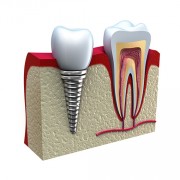
Dental crowns are small, tooth shaped covers placed over individual teeth to strengthen and improve the appearance of teeth. They are cemented to the tooth’s surface end where the the tooth meets the gum line.

There are many reasons you could need a dental crown, but here are some of the most common ones:

  • To help a weak tooth from decaying or breaking
  • To fix a broken tooth
  • To cover and support a tooth that has so much filling inside that there is very little tooth left
  • To improve the appearance of tooth color and alignment
  • To hold a dental bridge in place

Typically, crowns are made from one of the following materials:

  • Stainless steel
  • Metals
  • Porcelain and metal
  • Resin
  • Ceramic

While crowns can make a vast improvement in the strength and appearance of your teeth, some of their varieties can cause teeth to appear to have a black line where the tooth meets the gum. This line is typically found in crowns based in metal and topped with porcelain for a natural look. The line is the metal of the crown beginning to show, and that’s never good. (The other possibility is that the tooth is naturally darker because of a procedure that permanently limited blood flow to the tooth – a like a root canal).

Porcelain-fused-to-metal crowns are often used for their ability to withstand the biting force of molars, but improvements in dental materials are making all porcelain crowns an equally strong but better looking alternative. If you feel that your dark gumlines are detracting from your ability to smile with confidence, schedule a time to come talk with our Chauvin team so we can get you back to grinning.

https://lafayettedentistchauvin.com/wp-content/uploads/2015/11/dental-implant.jpg 510 510 admin https://lafayettedenti.wpengine.com/wp-content/uploads/2014/07/logo_new.jpg admin2017-06-07 07:18:012017-06-07 19:04:34Why do I have black lines under my crown?
teeth grinding chauvin dental lafayette la

Teeth grinding causes and treatments

May 24, 2017/in Uncategorized/by admin

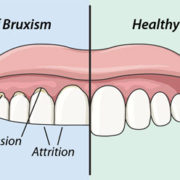
Have you ever woken up in the morning feeling pain in your jaw and the furthest thing from refreshed? These are signs that you could be suffering from bruxism, or chronic teeth grinding that can lead to serious dental issues if not addressed and treated correctly.

Teeth grinding is often thought to occur due to excessive stress levels, but that’s not the only trigger. Some common causes include:

  • Stress or anxiety
  • An abnormal bite
  • Missing or crooked teeth

But you’ve probably never heard that grinding your teeth is a survival method.

When you sleep, your body goes through light and heavy cycles of consciousness. During the deepest parts of sleep, your body engages in processes to repair damage that results in you feeling refreshed the following day, but it also can result in some breathing issues. When you reach the deepest point of sleep, the entire body relaxes, including the heavy jaw which falls back towards the neck. Second, the tongue expands to almost twice its size, further inhibiting the airway. This is called “obstructive sleep apnea,” and the brain responds to this blockage by engaging the jaw to open the airways and to allow you to continue breathing.

The upside is that you can breathe. The downside is that you sleep terribly.

Though teeth grinding is life-saving in some circumstances, it does have negative effects such as:

  • Dull headache after sleeping
  • Tooth damage from wear (fractures, loosening, loss)
  • TMD/TMJ complications
  • Facial changes
  • Severe pain
  • Exhaustion due to never reaching deep sleep

In order to address teeth grinding, it’s important to visit your dentist to see if your bite or missing teeth can be corrected to avoid further grinding. If you do not have missing teeth or an incorrect bite, your grinding might be a result of non-dental problems related to a blocked airway which can be treated with mild lifestyle changes like losing weight or quitting smoking. More aggressive treatment includes visiting a doctor to inquire about Continuous positive airway pressure (CPAP). No matter the cause, teeth grinding is a problem that can lead to serious dental problems and should be addressed as soon as the symptoms persist.

https://lafayettedentistchauvin.com/wp-content/uploads/2017/03/teeth-grinding.jpg 248 500 admin https://lafayettedenti.wpengine.com/wp-content/uploads/2014/07/logo_new.jpg admin2017-05-24 07:43:042017-03-28 13:49:23Teeth grinding causes and treatments
root canal dr chauvin lafayette la

All about root canals

May 17, 2017/in root canal/by admin

Root canals. You’ve heard the name, you’ve cringed for the poor souls going to the dentist for one, but do you know what a root canal procedure is? Or the reasons you might need one?

The inside of your tooth is filled with a soft material called “pulp” that help your teeth grow into maturity. When that pulp becomes infected or inflamed, it must be removed to relieve pain caused by swelling and minimize permanent damage to your teeth.

There are a few reasons you might need a root canal:

  • Internal tooth decay
  • Multiple dental procedures on the tooth
  • Cracked or chipped tooth

A few signs point to the need for a root canal:

  • Pain
  • Sensitivity to hot and cold
  • Sensitivity to touch
  • Discoloration
  • Swelling, drainage, tenderness in the lymph nodes and gum tissue

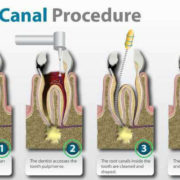
The root canal procedure follows these steps:

  1. X-rays taken and anesthetic administered
  2. Crown of the tooth (top of the tooth) opened and pulp removed from the inside of the tooth to make room for filling
  3. Space filled with a rubber-like material and an adhesive cement
  4. Crown placed on top of the tooth to restore it to full function

Root canals are often the subject of dental horror stories, but understanding the steps and going to a trusted and experienced dental provider can help put your mind at ease and relieve your pain. If you’re experiencing any of the symptoms above, consult our team to see how we can help.


https://lafayettedentistchauvin.com/wp-content/uploads/2017/03/root-canal-dr-chauvin-lafayette-la-.jpg 437 680 admin https://lafayettedenti.wpengine.com/wp-content/uploads/2014/07/logo_new.jpg admin2017-05-17 07:13:562017-03-20 15:17:17All about root canals
jaw pain

Living with TMJ

May 10, 2017/in Uncategorized/by admin

“Tem-puh-roe-mun-DIB-u-lur”

Say that five times fast.

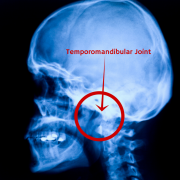
This tongue twister refers to the pair of joints on the sides of the face that hinge the jaw to the skull, but it’s typically known better by its more manageable acronym: TMJ.

When people talk about TMJ, they’re often referring to pain in the face and jaw caused by temporomandibular disorders (problems with the joint and the facial muscles which control it).

These joint issues have multiple possible sources:

  • Grinding of teeth at night
  • Clenching of jaw from stress
  • Arthritis in the joint
  • Injury to the jaw, the joint, or the neck

Any of these causes can lead to a host of symptoms, including:

  • Pain when opening mouth wide
  • “Stuck” or “locked” jaw in open or closed position
  • Clicking or popping noises during opening and closing
  • Swelling
  • Tired feeling in face

Though TMD can be incredibly uncomfortable for those experiencing it, treatment options are vast and non-invasive. Easing the pain can be as simple as treating the joint as a muscle injury giving the jaw a rest. Try eating softer foods, limiting opening the mouth widely, or wearing a mouthguard at night if you grind your teeth.

If you believe your case of TMD is severe enough to require further treatment, consider visiting Dr. Chauvin to explore your relief options.


https://lafayettedentistchauvin.com/wp-content/uploads/2015/02/TMJ-e1422993943958.png 300 300 admin https://lafayettedenti.wpengine.com/wp-content/uploads/2014/07/logo_new.jpg admin2017-05-10 07:38:052017-03-21 16:39:45Living with TMJ

Dental Bonding vs. Veneers: What’s the difference and which do I need?

May 3, 2017/in Uncategorized/by admin

No matter what, no one loves cracked, gapped, or stained teeth. That’s why many people turn to dental bonding and veneers to help fix these issues and gain confidence in their smiles.

But what are these procedures? And how do they help improve the look of damaged or imperfect teeth? And when should you choose one over the other?

Dental Bonding

Bonding is the process of applying a putty-like resin to the surface of the teeth to mask imperfections. This putty matches the color and texture of your natural teeth and is mainly used to fix minor issues like chips and stains.

Pros:

  • Less expensive option: $200-$700 per tooth
  • Fast procedure (one visit)
  • No tooth preparation necessary

Cons:

  • Can be stained by coffee, tea, and cigarettes
  • Meant for minor changes, not entire smile

Veneers

Veneers are porcelain shells custom made to fit the fronts of teeth. First, a thin layer of enamel is removed from your teeth to prepare for the veneer, and then an image of the teeth is used to create a custom shaped veneer. They’re applied to the teeth with adhesive. Veneers are used to cover up gaps, crooked, and stained teeth.

Pros:

  • Resist changes from coffee, tea, and cigarettes
  • Look more like natural teeth than molding

Cons:

  • More expensive than molding: $800-$2,000 per tooth
  • More time consuming and labor intensive (three visits)


When you require major changes that will last for long periods of time, veneers are a viable option. For minor cosmetic changes on a smaller budget, dental bonding is a solution. Chauvin Dental has extensive experience with both procedures. Contact us for a consultation, and we’ll decide together which is the right option for your smile.


https://lafayettedentistchauvin.com/wp-content/uploads/2014/11/dental-cleaning-lafayette-dentist.jpg 683 1024 admin https://lafayettedenti.wpengine.com/wp-content/uploads/2014/07/logo_new.jpg admin2017-05-03 07:35:402017-03-14 18:40:53Dental Bonding vs. Veneers: What’s the difference and which do I need?
activated charcoal

How does activated charcoal whiten teeth

April 26, 2017/in Uncategorized/by admin

Activated charcoal is a most commonly used as a treatment for overdose or poisoning. It’s an oral treatment that binds to toxins and drugs that have been ingested. It will absorb many different things, and can be even used on dogs. Some people use it to treat hangovers, alleviate bloating and gas, filtering water, cleaning mold, and tooth whitening. But charcoal is black!

How does activated charcoal whiten teeth?

Activated charcoal whitens teeth the same way it treats toxins – it’s absorbent! When activated charcoal is applied to the teeth, it absorbs plaque and all of the microscopic stain causing bits. It even alters the pH balance of the mouth, which assists in preventing cavities, gum disease, and bad breath. If you have crowns, veneers, or caps that are porcelain, the charcoal can stain them, so use with caution.

Using activated charcoal to whiten teeth:

If you look anywhere online, you’ll read something like: It’s very easy to do, simply wet a toothbrush, dip it into powdered charcoal, and brush away! After 2-4 minutes, rinse your mouth thoroughly. It’s that easy! Charcoal doesn’t taste great, but to be fair, most tooth whitening options don’t. You don’t have to do it every day, 2 or 3 times a week is sufficient.

Activated charcoal sounds great, but until we know more about it, best to use teeth whitening measures that have been rigorously tested, and approved by dentists. If you do choose to use activated charcoal to whiten your teeth, there are some things you should keep in mind:

  • Everyone’s teeth are different. What works for one person may not work for another due to genetics and overall dental health.
  • Charcoal may be abrasive. Medical professionals are not yet certain of the effect the charcoal has on teeth, but it could lead to deterioration of the enamel and tooth erosion – which opens the door to decay.
  • If use of activated charcoal hurts at all – stop immediately, you may be causing damage to your teeth.
  • Dentists don’t know how effective the charcoal is, so it may leave your teeth looking blotchy (especially if it’s not applied evenly).

Teeth are alive. They have soft tissue (called dentin) and roots, that are protected by enamel. And enamel does not grow back. If the enamel becomes too damaged, it can no longer safely protect the dentin inside, and the tooth will need to be covered up with restoration. If you are looking for a whiter smile, discuss safer options with your dentist.

https://lafayettedentistchauvin.com/wp-content/uploads/2017/03/activated-charcoal.jpg 600 600 admin https://lafayettedenti.wpengine.com/wp-content/uploads/2014/07/logo_new.jpg admin2017-04-26 07:00:192017-03-29 13:12:13How does activated charcoal whiten teeth
wisdom teeth xrays

How often should I have dental x-rays taken?

April 12, 2017/in Uncategorized/by admin

We’ve all had to bite that weird little piece of plastic and have a strange machine take pictures of our face. Although a bit unpleasant, dental x-rays are incredibly valuable, allowing the dentist to identify:

  • Root canal or bone changes caused by infection
  • Decayed areas of teeth that indicate cavities
  • Bone loss associated with gum disease
  • Abscesses
  • Tooth decay beneath pre-existing fillings
  • Developmental abnormalities
  • Incoming wisdom teeth

They’re also used to ensure that a child has enough room for incoming adult teeth, and to help the dentist prepare for things like braces, implants, dentures, and other procedures. Being that they’re so useful – you may wonder how often you should have dental x-rays taken. The answer is entirely up to you.

Dental x-rays may need to be done as often as every six months, or as little as once every few years. There are a few factors that will determine how often you have them done. Each dentist will have their own policy, but to give you an idea of what to expect:

New adult patients to a dentist’s office will most likely have x-rays done to establish a baseline if they have a history of tooth decay. The dentist will need to see what work, if any, has been previously performed, as well as establishing current overall dental health. After that, x-rays will be taken every 6-12 months. If the adult has healthy teeth, with little to no history of tooth decay, x-rays will only be taken every 2-3 years.

When it comes to children without any permanent teeth, x-rays will need to be taken if all surfaces of their teeth cannot be probed or visualized. If decay is present, x-rays will be taken every 6 months until the decay is gone. If there’s no decay, x-rays are only needed every 1-2 years.

As their permanent teeth begin to erupt, a full series of x-rays will be taken to ensure that the teeth are coming in correctly, that the mouth has enough room for the adult teeth, and to keep an eye on the wisdom teeth. If there is decay, they will have 1-2 dental x-rays a year. If there’s no decay, then x-rays are only needed every 18-36 months.

In a nutshell, the healthier your teeth, the less necessary x-rays are, especially as an adult. Practice good oral hygiene, and you won’t need as many. Have more questions about dental x-rays? Contact Dr. Chauvin’s office.

https://lafayettedentistchauvin.com/wp-content/uploads/2014/12/Fotolia_65927766_XS.jpg 248 483 admin https://lafayettedenti.wpengine.com/wp-content/uploads/2014/07/logo_new.jpg admin2017-04-12 07:51:542023-02-23 10:56:56How often should I have dental x-rays taken?
Page 14 of 21«‹1213141516›»

All Categories

  • braces
  • cavities
  • Childrens dental
  • Dental Conditions
  • dental crown
  • dental hygiene
  • Dental options
  • dentures
  • fluoride
  • Gum health
  • jaw
  • root canal
  • teeth whitening
  • toothache
  • Uncategorized
  • wisdom teeth

General Dentistry

104 Energy Pkwy
Lafayette, LA 70508
(337) 234-2186

CONTACT US
PAY BILL ONLINE

Our Office Hours

  • Monday:7:00am-3:30pm
  • Tuesday:7:00am-3:30pm
  • Wednesday:7:00am-4:30pm
  • Thursday:7:00am-4:30pm
  • Friday:8:00am-3:00pm

New Patient Forms

For your convenience, we invite all new patients to complete our new patient forms online to expedite the paperwork at your first visit.

NEW PATIENT FORMS

Healthy, Beautiful Smiles for a Lifetime

  • • Comprehensive Dental Care
  • • Comfortable, High-Tech Office
  • • Early Morning Appointments
  • • Relaxing Sedation Options
  • • TVs & Blankets in Treatment Rooms
  • • Insurance Friendly
  • • Flexible Financing Options
  • FAQ
  • Contact
  • Sitemap
  • Pay Bill Online
  • Scheduling
  • New Patient Forms
104 Energy Pkwy
Lafayette, LA 70508
Search Search
Scroll to top Scroll to top Scroll to top