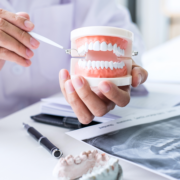
3 Signs You Need Dental Implants

A dental implant is an attractive option for people who have lost or broken one or more teeth. Dental implants are typically preferred by dentists, provided the patient is in good overall health and able to heal properly from the procedure.

Implants offer several advantages over other tooth replacement options such as bridges or dentures. They closely mimic the look and function of natural teeth, are easy to care for, and are designed to last for many years with proper maintenance.

Dental implants are made from titanium and are surgically placed into the jaw to support a replacement tooth. In most cases, the implant is inserted directly into the jawbone. Over time, the bone naturally fuses with the titanium in a process called osseointegration, creating a stable and durable foundation for the new tooth.

How Do You Know If You Need Dental Implants?

If you are unsure whether dental implants are right for you, there are a few common signs to look out for. Below are three reasons to consider scheduling a consultation with your dentist.

1. You Have Missing or Broken Teeth

Tooth loss can occur for many reasons, including injury, decay, or gum disease. It is more common than many people realize, and there is no need to feel embarrassed.

Dental implants are often most effective when placed soon after tooth loss. Replacing missing teeth early can help maintain the structure of your jaw and prevent additional dental issues over time.

2. You Are Unhappy With Dentures or Bridges

While dentures and bridges are common solutions, they may not always provide the comfort or convenience patients are looking for. These options can require more maintenance and may need to be replaced periodically.

Some patients find that dentures or bridges feel unstable or limit their ability to enjoy certain foods. Dental implants provide a more secure and long-term alternative that can improve both comfort and function.

3. Your Confidence Has Been Affected by Your Smile

Your smile plays an important role in your overall confidence. Missing or damaged teeth can make everyday activities such as eating or speaking in social settings feel uncomfortable.

Dr. Chauvin is committed to helping patients feel confident in their smiles again. Dental implants can restore both appearance and function, allowing you to feel more at ease in daily life.

Caring for Dental Implants

Caring for dental implants is similar to caring for your natural teeth. Maintaining good oral hygiene is essential for long-term success.

With proper care, dental implants can remain a reliable and lasting solution for tooth replacement.

If you are considering dental implants and want to know if you are a good candidate, schedule an appointment with Dr. Chauvin’s office today! 

Frequently Asked Questions About Dental Implants:

1. How long do dental implants last?

Dental implants are designed to be a long-term solution. With proper care and regular dental visits, they can last many years and often decades.

2. Is the dental implant procedure painful?

The procedure is typically performed with local anesthesia, so patients should not feel pain during the surgery. Some mild discomfort may occur afterward, but this can usually be managed with standard pain relief.

3. Am I a good candidate for dental implants?

Most people with good overall health and healthy gums are candidates for dental implants. Your dentist will evaluate your jawbone and oral health to determine if implants are right for you.

4. How long does the implant process take?

The full process can take several months. This allows time for the implant to properly integrate with the jawbone before the final restoration is placed.

5. Are dental implants better than dentures?

Dental implants offer a more stable and permanent solution compared to dentures. They function more like natural teeth and do not require removal for cleaning.

6. How do I care for my dental implants?

Dental implants should be cared for just like natural teeth. Brushing, flossing, and regular dental checkups are key to maintaining their health and longevity.

Why are dental implants better than dentures?

When a person has lost one or several teeth, it’s very important to fill in the gaps. If there’s missing teeth, our other teeth will shift to compensate for the gap, eventually causing problems. There are a couple of options available for missing teeth, dentures and dental implants. Although dentures are the more common option, dental implants are superior. 

In this blog, our team of dental professionals at Tim Chauvin, DDS & Associates explains why.

What are dentures and dental implants?

Dentures are simply a removable mouthpiece that is attached to the gums with denture adhesive. Known as false teeth, they take some getting used to. They can shift while eating or speaking, and can even cause tooth decay in the surrounding, healthy teeth if they are not fitted correctly.

Dental implants are false teeth that are non-removable. They’re installed surgically, and look natural. They don’t damage the surrounding teeth and tissue, and if they’re correctly cared for they’ll last for decades.

Why are dental implants better than dentures?

Dental implants have the edge over dentures for several reasons.

  1. The most important reason dental implants are better is that they don’t cause infection or tooth decay. If a partial denture is too small, it allows bigger food particles to get trapped between the teeth. This of course leads to the development of plaque and cavity-causing bacteria. If the dentures are too big, they can rub against adjacent teeth, eventually wearing down the enamel, and making it easier for cavities to develop.

  2. Food particles and bacteria can also be trapped between the dentures and the gum line, especially if the dentures aren’t cleaned properly. This opens the door to other mouth infections or gum disease. Dentures are the better option only if people have a weak or unhealthy jaw and gums.
  3. Dental implants are the ideal option for people with a healthy jaw and gums. Typically, dental implants are used to replace one or two missing teeth, however two or more implants can be used as a base for multiple replacement teeth. Dentists actually prefer implants as they provide a more comfortable, natural-looking option for people who need a replacement tooth.

Are there any cons to dental implants?

The only bad news when it comes to dental implants is that they’re expensive, and some insurance providers won’t cover them.

If this is a problem for you, talk with your dentist and see if they will use your denture allowance towards a dental implant. Some dentists will, some won’t, but it doesn’t hurt to ask.

Contact Tim Chauvin DDS & Associates Today

If you’re looking at replacing a missing tooth, set up an appointment in our office today! We’ll go over the options and get you squared away.

Why replace a lost tooth?

As a child, losing teeth is a very necessary step in growing up. Baby teeth fall out, adult teeth come in. However, losing a tooth (and not replacing it) as an adult, can have very dramatic dental and medical consequences. Our mouths have evolved over the millennia to be what they are today, and when a tooth is missing, it throws off a lot of things.

From our Lafayette dentist Dr. Chauvin and his dedicated team, here are some reasons you should consider replacing a lost tooth as an adult.

1. Missing a Tooth Makes Chewing Difficult

The first problem is a loss in chewing efficiency. Every lost tooth is a 10% loss in your ability to chew properly. This leads to swallowing food that is not completely chewed, increasing your risk of choking, and leading to digestive problems (because the rest of the digestive system now has to compensate for your teeth not properly doing their jobs).

The primary function of the mouth is to break down food enough for the stomach to be able to digest properly. If food isn’t masticated properly, the stomach may not be able to fully break down the food, so your body won’t be able to properly absorb nutrients from what you eat. Also, large chunks of food that do not digest can become a breeding ground for bacteria, ultimately causing gas, bloating, constipation or diarrhea, cramping, and abdominal pain. This can also contribute to acid reflux or GERD (Gastroesophageal Reflux Disease).

2. Missing a Tooth Can Lead to Jaw Troubles

Another issue from a lost tooth is something called extrusion or supereruption. Essentially, without support on the opposite side of the mouth, the tooth on the opposite jaw will begin to drift down (or up) into the vacant space. The teeth on either side of the gap can drift inward as well, causing additional teeth to be misaligned. This reduces your bite strength, increases wear and tear on your teeth, and makes them harder to clean properly.

Moreover, the drifting and misalignment of teeth can also lead to temporomandibular joint (TMJ) disorders. When your teeth are not aligned properly, it can cause undue stress on your jaw joints and muscles. This stress can lead to chronic pain, headaches, and even difficulty opening and closing your mouth. TMJ disorders can significantly affect your quality of life, making everyday activities such as eating and speaking uncomfortable and challenging. Proper alignment and replacing missing teeth can help prevent these issues and maintain overall oral health.

3. Missing Teeth Can Cause a Collapsed Bite

You can also experience a collapsed bite. Your arch, the arc between the backs of your back teeth, will degrade over time. This will make your nose begin to point down, making your face shorter. After that, muscle tone in your face will be reduced, causing sunken cheeks and a pinched facial expression. In a nutshell, it makes a person look a lot older due to the loss of bone volume and muscle tone.

Contact Dr. Chauvin Today

It’s very important to replace a lost tooth immediately. The longer you wait, the harder it will be to fix. Once the other teeth start moving around, braces may be required to push them back into place. And as the teeth degrade, getting an accurate bite imprint will be almost impossible.

Have a missing tooth you suddenly feel a need to have fixed? Contact Dr. Chauvin’s office today!

Should I Get a Dental Bridge or Implant?

Dental bridges and implants are some of the more common options for most people who are looking for an effective way to restoring their pearly white smile without the need to use dentures. This is an excellent choice for you to restore your teeth, and even eating and talking will feel just like normal.

From our experienced Lafayette dentist Dr. Tim Chauvin, here’s everything you need to know when deciding between these options.

Dental Bridges

Dental bridges are considered the easiest solution to bridge the gap that is created by missing one or more teeth. It actually contains a bridge that connects the adjacent teeth to provide a natural look. The connecting tooth is called a false tooth or pontic that can be made of alloys, porcelain or gold. Dental bridges can be supported by either the natural teeth or a dental implant.

This is an easy and inexpensive procedure to select if you need to restore your smile right away. Setting up dental bridges is  easy and will not require an enormous amount of time.

Dental Implants

Dental implants are another option to restore your smile. This is a more in-depth dental procedure wherein a titanium post is implanted within the jawbone. As the jawbone grows, it effectively fuses with the titanium post, which makes this a permanent option. The temporary crown will be then attached to the post as it fuses and heals.

The healing from this procedure takes anywhere from 6 weeks to 9 months, all depending on the implant’s location. Dental implants can be used also to secure dentures or bridges.

Which is a Better Choice for My Teeth?

Dental bridges may be a better choice for some people, while dental implants may be the way to go for others.

  • Dental implants can be less noticeable which will offer a more natural look.
  • Dental implants also give you the chance to chew food better, as compared to bridges where the artificial tooth may slip.
  • The bridges also require vigorous care to effectively place them. If one of the teeth wherein the attached bridge is affected, it can require replacement of the entire bridge to correct the problem.
  • The main issue with dental implants is they are much more expensive.

Generally speaking, if you are on a budget, then a dental bridge is the best choice, but if you want to have a more permanent solution, then a dental implant may be the right option.

Get in touch with our dental team today to see which is right for you!

How Long Do Dental Bridges and Implants Last?

The life span of dental bridge can reach up to 10 or more years, depending on proper care and hygiene.

Dental implants are permanent, but bridges and crowns that are attached to them will require replacement as time goes by.

In general, proper oral care is very imperative to have long-lasting benefits of these dental procedures.

Contact Dr. Tim Chauvin, Lafayette Dentist Today

In conclusion, dental bridges or dental implants are both an effective way to help to reinstate your smile. You just have to consider several aspects that can influence your decision on the best type of dental procedure that is applicable to your needs. Our team is here to help! Contact our office today to get started.