• Link to Facebook
  • Link to X
  • Link to Instagram
Dr Chauvin
  • Home
  • About
  • Doctors
  • Testimonials
  • Services
    • Teeth Cleaning
    • Teeth Whitening
    • Dental Implant Restoration
    • Dentures and Fixed Bridges
    • Root Canal
    • Mouth Guards
    • Night Guards
    • Root Canal
    • Fillings
    • Porcelain Crowns
    • Wisdom Teeth Extraction
    • Periodontal Gum Treatments
  • Advanced
  • Sedation
  • FAQ
  • Blog
  • Contact
  • Pay Bill Online
  • Menu Menu
biggest-dental-hygiene-mistakes:

Biggest dental hygiene mistakes

October 4, 2017/in Uncategorized/by admin

We’re going to venture a guess here and say that dental hygiene is no one’s favorite pastime.

There’s something about brushing and flossing that pales in comparison to literally everything else, and we know that. Why do you think dentists are so necessary?

The good news is that most of us work past that distaste and get the teeth cleaning into our schedules, but how good of a job are we really doing?

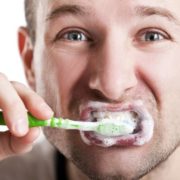
News flash: 15 seconds is not long enough to get those puppies clean.

Get this – not only could you be doing a lackluster job, you might actually have some habits that are actively BAD for your teeth. That’s right. You could be putting in the time and effort to do some little thing the internet or your best friend told you was dental magic, and you’re actually making a huge mistake.

So what are the most common dental hygiene mistakes you might be making?

Check it out.


  • You listen to the internet


We know – it’s a great place. It opens up doors to information and opportunities those before us couldn’t even fathom, but some things are better left un-fathomed. For example, DIY braces crafted from store-bought rubber bands, or the newest teeth whitening method that calls for swishing straight peroxide around your mouth until your teeth are glistening! Or just eroded down to nubs.

The problem is that while some advice online is great and harmless, there are too many Pinterest dentists whose methods might leave you in worse shape than you started. Our advice is to only use materials that are ADA approved, or just come ask us what we think.


  • You brush right after you eat


Logic might tell you to brush right after you eat to remove the remnants of whatever food you just ate.

In that case, logic would be wrong.

Turns out that when you eat, the acids and sugars from the food you just chewed actually break down and weaken the enamel on your teeth. If you get right in there and brush your teeth with fervor, then you might be doing more damage than good. Those furious back and forths are removing the already weakened enamel, and this habit could cause premature deterioration.

In most cases, wait 30 minutes before brushing. If you’ve just eaten something high in sugar or acid, swish some water around your mouth to rinse away any significant residue.


  • You’re brushing too hard


You might feel like your teeth will thank you, but they really won’t. Brushing too hard or using a brush with hard bristles leads to the erosion of your enamel. According to a 2011 study published by the Journal of Periodontology, hard-bristled toothbrushes are great at removing plaque, but they’re also more likely than soft brushes to cause gingivitis and damage tissue.


  • You’re not brushing enough


Twice a day, 2 min each. You might be SHOCKED at how long that feels, but we promise it’s worth it.


  • You’re a boring brusher


Don’t take this personally, it’s not judgement, but you might just be a boring brusher. If you start in the same place every day, then your natural “brushing path” might leave some areas well taken care of while others are neglected.

You also might only be brushing your teeth which is no good. The tongue collects a great deal of bacteria, so give it a good brush for better breath and a cleaner mouth.

If you’re feeling like striking a good balance might be hard, you’re right – but it’s not impossible! Establishing fantastic dental hygiene is all about getting in good habits, and we think you’re on your way there.

Coming to see Dr. Chauvin in Lafayette can’t hurt, either! Make an appointment today.

 

https://lafayettedentistchauvin.com/wp-content/uploads/2017/08/biggest-dental-hygiene-mistakes.jpg 448 672 admin https://lafayettedenti.wpengine.com/wp-content/uploads/2014/07/logo_new.jpg admin2017-10-04 07:11:102017-08-31 14:13:57Biggest dental hygiene mistakes
Why are people afraid of the dentist?

Why are people afraid of the dentist?

September 20, 2017/in Uncategorized/by admin

For countless people, going to the dentist is a wildly stressful event. This anxiety can range from a minor discomfort to a full on phobia. In fact, Colgate Oral Center estimates that about 9 to 15 percent of Americans avoid going to the dentist due to this fear. That translates to about 30 to 40 million people who will put up with painful, infected, and decaying teeth because they are so scared of what might happen in the dentist’s chair.

Whether you are on the low or high end of that anxiety spectrum, your fear might result in the avoidance of important appointments that are vital to your oral health. The negligence of a painful tooth could ironically result in much more discomfort than any procedure you will encounter in a dentist’s office.

So what’s behind the fear? And what can you do to move past it?

The Causes

Are we just born with an innate fear of the dentist, or is there a more specific cause? Peter Milgrom, DDS, director of the Dental Fears Research Clinic at the University of Washington in Seattle says that the majority of the fear is a result of a bad experience that took place at a past dental appointment. The remaining people feel this crippling anxiety as a symptom of other anxiety disorders, like post traumatic stress disorders related to domestic violence, abuse, combat, etc.

But what about those of us who just feel….slightly uncomfortable?

It’s not unusual, explains psychologist Ellen Rodino of Santa Monica, California. When you’re in the dentist’s chair, you are incredibly exposed. You are tilted backwards, mouth open, and another human is above you. For added discomfort, they talk to you while there are tools in your mouth.

So what does this amount to? For many, it’s a feeling of complete and total vulnerability and a lack of control.

Dealing with the Fear

Believe it or not, there are ways for people with even the most crippling fear to move past the phobia and get the dental treatment they need.

Here are some of the ways that great dentists help patients feel a stronger sense of control:

  • They tell the patient exactly what they will feel and the duration of that feeling
  • They ask the patient if it is okay to continue to the next step
  • Patients have a cue they can give the dentist if they need the procedure or examination to stop
  • Time is set aside for breaks

Another great way that dentists are helping nervous patients is by creating an environment that is less like a classic dentist’s office. Instead of decorating the waiting room with tabloids and unnerving photos of damaged teeth, dentists are creating a warmer environment that is much less “clinical.”

Jack Bynes, DMD, is a great example of a dentist committed to making people feel more comfortable. His office is in a historic building where guests can enjoy a waiting room with a fireplace and beautiful photography. The treatment room overlooks a waterfall, and the doctor himself chooses not to wear scrubs.

Well, we don’t have a waterfall here, but we do have some strategies we recommend that might help you get over that hurdle of anxiety:

  • Bring someone with you to your appointment! This could be a friend or family member – just someone you trust
  • Allow yourself to be distracted while you sit in the examination chair by listening to music or checking out our TV on the ceiling!
  • Take deep, slow breaths to help calm your heartbeat and relax your muscles


At Chauvin Dental, can promise that we will make our best effort to make you as comfortable as possible. Our job is to help you achieve a beautiful, healthy smile, and we take that seriously. Give us a call today, and we can talk about making your next visit an anxiety-free experience.


https://lafayettedentistchauvin.com/wp-content/uploads/2017/08/Why-are-people-afraid-of-the-dentist.jpg 667 1000 admin https://lafayettedenti.wpengine.com/wp-content/uploads/2014/07/logo_new.jpg admin2017-09-20 07:11:052017-08-29 18:13:44Why are people afraid of the dentist?
Good and bad food for breath

Good and bad food for breath

August 9, 2017/in Uncategorized/by admin

Bad breath might very possibly be the most loathed and feared non life-threatening condition people deal with today. Nobody likes bad breath, least of all those who have to smell it on the uncomfortable close talker or the colleague whose egg salad stuck around hours after lunch ended. Almost everyone fears that they have it, and almost no one knows when they do.

If you are at least lucky enough to know that halitosis (the fancy name for bad breath) is a problem that you need to deal with, then there are two main courses of action to remedying the problem:

  1. Improve your dental habits (brushing, flossing, etc)
  2. Improve your diet

Most people know that better dental habits are a key to improving breath, but people are less aware of the potential impact diet has on the scent you give off. Though there is no conclusive evidence that specific foods results in horrendous breath, we can at least talk about some of the most widely believed causes of “dragonbreath.”

Foods Linked to Bad Breath:

  • Dairy products (milk, cheese, yogurt)
  • Coffee
  • Garlic
  • Onions
  • Citrus juices (i.e. orange juice)
  • Alcohol
  • Foods high in sugar

There are a few problems that the above foods tend to cause. One issue is that some of them slow saliva production which is your body’s natural mechanism for flushing out bacteria and food residue. Other foods, like onions and garlic, are pungent and linger in the mouth long past the time they are eaten. Another issue is that foods high in sugar or with high acidity create an environment favorable to bacteria growth, also contributing to bad breath.

Foods Linked to Good Breath:

  • Water
  • Sugarless gum
  • Apples and other food with crunch!

Increasing your water intake or chewing gum increases the amount of saliva the body produces, and this saliva is what helps to clean out your mouth and naturally remove bacteria. If you aren’t taking in enough water or producing enough saliva, then it is possible for that production to slow and for bacteria to build up and result in foul breath. That is why your breath in the morning is not pleasant – the body slows saliva production during the night, allowing for the build up of many unpleasant smelling bacteria. Another good habit is to eat foods with a crunch. For example, eating an apple can help remove the leftover food particles stuck in between the teeth whose decomposition never smell nice.

Overall, if you pay attention to the foods you eat and the care you take in the morning, throughout the day, and at night, then you should be on the path to fighting bad breath and ensuring general dental health. Bad breath shouldn’t be a barrier to your success or to your relationships, so do your best to figure out the best way to deal with the problem and live confidently!

https://lafayettedentistchauvin.com/wp-content/uploads/2017/08/Good-and-bad-food-for-breath-.jpg 807 575 admin https://lafayettedenti.wpengine.com/wp-content/uploads/2014/07/logo_new.jpg admin2017-08-09 15:38:202017-08-09 15:38:20Good and bad food for breath
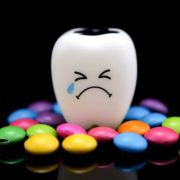
Tooth Decay Is Crying With Emotions Sugar Coated Chocolate On Th

Why is sugar bad for your teeth?

August 2, 2017/in Uncategorized/by admin

Yeah yeah, we know sugar is bad for our teeth. Mom said it, dad said it, Mrs. Haverman in the first grade said it. Sugar’s role as our mouth’s archnemesis is not new information, but have you ever stopped to consider WHY it’s so bad for you? Well, we’re here to tell you that unfortunately, the adults in your life didn’t make up the horror stories just to keep you away from the joy of a Snickers bar. There’s really some annoying science behind it…

First of all, we should note that it’s not really the sugar’s fault, it’s the reaction the sugar triggers in your mouth. According to the National Institute of Dental and Craniofacial Research (and probably any other person with a scientific background) your mouth is home to a host of bacteria – some good and some bad. They’re a part of the environment of your body, but sometimes what we put into our bodies disturbs the equilibrium of our natural ecosystem.

When you eat sugar, some of the bad bacteria in your mouth recognize a new food supply. They pig out on the molecules left on the surface of your teeth from your last lollipop or cookie, and when they do, they produce an acid that can destroy the tooth enamel. The acid does this by dissolving minerals on the surface of your teeth. While saliva helps to replenish these minerals (such as calcium, phosphate, and fluoride), they can’t do their repair work fast enough if you are consuming one sugary substance after another.

Eating too much sugar and not giving the repair process time can create cavities which work from the outside in. They begin on the tooth’s surface and slowly eat through the dentin (soft layer under your enamel) until they reach the pulp of the tooth where your blood vessels and nerves are stored.

Result? Discomfort, pain, and a trip to the dentist.

The good news is that there are some pretty simple ways to prevent this nasty sugar situation from occurring:

  • Keep the saliva flowing
    • Chew sugarless gum
    • Drink water
    • Eat high fiber fruits and veggies
  • Eat foods with tooth-strengthening properties
    • Cheese, yogurt, and dairy (contain phosphates)
    • Green and black tea (suppress oral bacteria)
  • Use toothpaste with fluoride
  • Avoid excessive sugar consumption

Though sugar is not the only culprit when it comes to cavity development, it is a troublemaker. Take care to brush, floss, and consume foods that will limit potential damage to your pearly whites.

https://lafayettedentistchauvin.com/wp-content/uploads/2017/08/why-is-sugar-bad-for-your-teeth-chauvin-dental-lafayette-la.jpg 600 900 admin https://lafayettedenti.wpengine.com/wp-content/uploads/2014/07/logo_new.jpg admin2017-08-02 07:49:552017-04-20 16:53:31Why is sugar bad for your teeth?

Good and bad food for breath

July 19, 2017/in Uncategorized/by admin

Bad breath might very possibly be the most loathed and feared non life-threatening condition people deal with today. Nobody likes bad breath, least of all those who have to smell it on the uncomfortable close talker or the colleague whose egg salad stuck around hours after lunch ended. Almost everyone fears that they have it, and almost no one knows when they do.

If you are at least lucky enough to know that halitosis (the fancy name for bad breath) is a problem that you need to deal with, then there are two main courses of action to remedying the problem:

  1. Improve dental habits (brushing, flossing, etc)
  2. Improve diet

Most people know that better dental habits are a key to improving breath, but people are less aware of the potential impact that diet has on the scent you give off. Though there is no conclusive evidence that specific foods results in horrendous breath, we can at least talk about some of the most widely believed causes of “dragonbreath.”

Foods Linked to Bad Breath:

  • Dairy products (milk, cheese, yogurt)
  • Coffee
  • Garlic
  • Onions
  • Citrus juices (i.e. orange juice)
  • Alcohol
  • Foods high in sugar

There are a few problems that the above foods tend to cause. One issue is that some of them slow saliva production which is your body’s natural mechanism for flushing out bacteria and food residue. Other foods, like onions and garlic, are pungent and linger in the mouth long past the time they are eaten. Another issue is that foods high in sugar or with high acidity create an environment favorable to bacteria growth, also contributing to bad breath.

Foods Linked to Good Breath:

  • Water
  • Sugarless gum
  • Apples and other food with crunch!

Increasing your water intake or chewing gum increases the amount of saliva the body produces, and this saliva is what helps to clean out your mouth and naturally remove bacteria. If you aren’t taking in enough water or producing enough saliva, then it is possible for that production to slow and for bacteria to build up and result in foul breath. That is why your breath in the morning is not pleasant – the body slows saliva production during the night, allowing for the build up of many unpleasant smelling bacteria. Another good habit is to eat foods with a crunch. For example, eating an apple can help remove the leftover food particles stuck in between the teeth whose decomposition never smell nice.

Overall, if you pay attention to the foods you eat and the care you take in the morning, throughout the day, and at night, then you should be on the path to fighting bad breath and ensuring general dental health. Bad breath shouldn’t be a barrier to your success or to your relationships, so do your best to figure out the best way to deal with the problem and live confidently!

https://lafayettedentistchauvin.com/wp-content/uploads/2017/07/Screen-Shot-2017-04-18-at-10.00.48-AM.png 461 778 admin https://lafayettedenti.wpengine.com/wp-content/uploads/2014/07/logo_new.jpg admin2017-07-19 07:53:272017-04-18 15:06:12Good and bad food for breath

History of toothbrushes

July 12, 2017/in Uncategorized/by admin

It seems wrong to write a blog about the history of toothpaste without its counterpart, the history of the toothbrush. To remedy this, we’ll quickly take you through several thousand years worth of makeshift toothbrushes and their creators then let you decide which version you might come up with if you were stuck on a deserted island but still valued your oral hygiene.


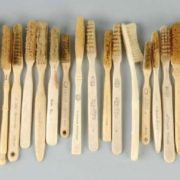
The Ancient Babylonians are first group mentioned in most histories of teeth brushing. This civilization lived in what is now present day Iraq, Kuwait, eastern Syria, and Southeastern Turkey and was responsible for a great deal of invention that contributes to today’s society, and the “chewing stick” is no exception. Historians estimate that this device was first used between the years 3500 and 3000 BC and was fairly straightforward – after all, this is ancient Mesopotamia we’re talking about. The stick was chewed on one end to create a frayed side for “brushing”, and the other end was sharpened into a point for picking the teeth. Toothpicks have some history, people.


The Chinese also provide evidence for creating their own version by 1600 BC. Like the Babylonians, their brushes were also made from sticks, but sticks particularly from “aromatic” trees to presumably help in the breath freshening department. But the Chinese would also invent a tool which looks more similar to our modern toothbrush, and these were made from bone or bamboo handles and pigs’ neck bristles. Simply delightful.


This Chinese design eventually made its way over to the west where pig neck bristles were swapped out in favor of horsehair – a much less effective material for removing food from the teeth. Western civilizations continued to make changes in their variety of teeth cleaning tools, introducing silver, copper, and goose feather toothpicks.


The basic structure of the toothbrush has changed very little since its initial conception, but we can all give a big round of applause for Du Pont Laboratories and their invention of nylon in 1937. This lead to the swift and VERY welcome change of using nylon bristles instead of using bones, hair, and other animal derivatives.


Cheers to these little guys:

https://lafayettedentistchauvin.com/wp-content/uploads/2017/04/history-of-toothbrushes-chauvin-dental-lafayette-la.jpg 369 600 admin https://lafayettedenti.wpengine.com/wp-content/uploads/2014/07/logo_new.jpg admin2017-07-12 07:28:342017-04-18 14:44:23History of toothbrushes
pediatric dentist

What are pediatric dentists?

June 28, 2017/in Uncategorized/by admin

If the phrase “we’re going to the dentist” has your kids jumping for joy, then read no further. You’re an alien allstar parent only here to make the rest of us feel bad.

If you aren’t so lucky, grab a pen and paper…

Dental care, just like regular visits to the doctor, is a vital part of your child’s healthy development. This means that we all face the intimidating process of picking the right dentist for our child and then suffer through actually getting said child to and from the appointment without an all out brawl.

The good news is that there are dentists out there who know that teeth cleanings are not your six year old’s favorite afternoon activity, and they’ve actually gone through years of school to learn the best ways to care for our kids’ teeth. Members of this fantastic breed of dental care providers are called pediatric dentists.

Pediatric dentists provide all the same care for your child as general dentists, but they do so with a specific expertise in caring for children in an environment designed to make your child comfortable. This requires a more thorough understand of a child’s teeth, jaw, facial structure, and general development. Pediatric dentists also typically create a child-centered office atmosphere that differentiates them from a general doctor’s office.

Educational Differences

Pediatric dentists go through the normally required four years of dental school plus two more years of training focused on the specific dental needs of the following groups:

  • infants
  • children
  • teens
  • children with special needs

Services Provided

Pediatric dentists perform a wide range of services including but not limited to:

  • Routine cleanings
  • Cavity and tooth repair
  • Infant oral exams
  • Nutrition and dietary advice for young teeth
  • Habit counseling (regarding the impacts of pacifiers and thumb sucking)
  • Identification of oral conditions related to internal diseases
  • Early advice for correcting bites (orthodontics)

Should I choose a general dentist or a pediatric dentist?

At the end of the day, that is your decision as a parent. All general, family practice dentists are trained in pediatric dentistry in dental school, but only pediatric dentists go through the extra training to specialize in children’s needs and often go the extra mile to make kids feel at ease with oral care. You’ll often find that pediatric dental offices are designed with kids in mind like in the images below.  

If your child is a little antsy about their routine teeth cleaning, or if you feel that they might need some extra care, consider looking into a pediatric dentist. It could make those yearly checkups more bearable for the person who looks forward to them the least – and that just might be you.

https://lafayettedentistchauvin.com/wp-content/uploads/2017/04/pediatric-dentist.jpg 393 590 admin https://lafayettedenti.wpengine.com/wp-content/uploads/2014/07/logo_new.jpg admin2017-06-28 07:33:142017-04-05 14:38:16What are pediatric dentists?
history of toothpast chauvin dental lafayette

History of toothpaste

June 21, 2017/in Uncategorized/by admin

Next time you reach for your tube of Crest, Colgate, or Arm & Hammer, send up a little thank you to the powers that be for your minty tube of wonders. As it turns out, our obsession with clean and healthy teeth is not anything new (though our methods are arguably MUCH better than past efforts…). Going all the way back to 5000BC, dental hygiene meant using some interesting and downright nasty methods to protect one’s pearly whites.

“Toothpaste” actually made its debut before the invention of the toothbrush. The Egyptians are responsible for the first recorded teeth cleaning substance, followed by the Ancient Greeks, Romans, and the Chinese. After taking a look at the ingredients involved in the early efforts, you’ll quickly realize that abrasion was the name of the game. Ancient people clearly understood that they needed to use a substance rough enough to get rid of the surface level undesirables that resulted in decaying teeth and horrible breath, but some of them might just make you scratch your head.

Drum roll please…

The Egyptians

First up, we have the Egyptians. The Egyptians created a special blend of ox hoof powder, burnt eggshells, and pumice which is a light and porous volcanic rock. Mm mm good! Although this mix often resulted in bleeding gums (we’re going to take a wild guess and blame that on the crushed rocks in their mouths), historians do say that their interesting methods were successful in comparison to some other attempts. Next up, the Greeks and Romans!

Greeks and Romans

The Greeks and Romans preferred to keep it calcium rich with their secret ingredient combo of crushed bones and oyster shells. They typically threw in some powdered charcoal and bark for good measure.

Chinese

The team here at Chauvin would like to give the “Most Likely Not to Spit Out” superlative to the the Chinese. They put together a showstopper with a mix of ginseng, herbal mints, and salts. At least this one doesn’t included cleaning your teeth with the remnants of other living creatures.

Modern-ish Methods

All we can say is that things didn’t look (or taste) too good until rather recently. The “modern” toothpastes began evolving towards the middle of the nineteenth century, but these were still not pastes in the sense that we understand today. The substances were typically powder-like and mixed with water upon use.

Potential ingredients:

  • Soap
  • Chalk
  • Betel nut (seed of a type of palm tree)
  • Ground charcoal
  • Burnt bread

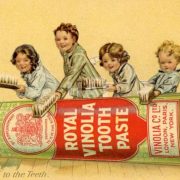
The world rejoiced in 1873 when Colgate released an inoffensively scented jar of toothpaste, and the innovations just kept rolling in.

1890s – tube introduced

1945  – soap eliminated from ingredient list

1950s – soap replaced with sodium lauryl sulphate to make the paste smooth

Since the 1950s, we’ve seen incredible product diversification in the toothpaste industry, so much so that you might just spend upwards of ten minutes just staring at the options on the supermarket shelves. Do I want sparkling white teeth? Breath freshening? Both? Baking soda formula? Extra strength cleaning? Kid friendly? All natural? Fluoride? Edible?

Well, the next time you’re standing in line feeling the anxiety of making this life changing toothpaste decision, just remember that you’re choosing between Maxfresh Mint and 3D whitening, not ox hoof and crushed bones.

That might just speed up your decision.


https://lafayettedentistchauvin.com/wp-content/uploads/2017/04/history-of-toothpast-chauvin-dental-lafayette-.jpg 363 500 admin https://lafayettedenti.wpengine.com/wp-content/uploads/2014/07/logo_new.jpg admin2017-06-21 07:23:152017-04-05 14:31:16History of toothpaste
vaping

Is vaping safer for your oral health?

June 14, 2017/in Uncategorized/by admin

E-cigarettes made their American debut in 2006 – much to the gleeful delight of smokers looking for a healthier alternative to the classic cigarette. Now, instead of inhaling tar and other harmful byproducts of burning tobacco, smokers can take in nicotine through a nifty looking battery powered life saver commonly referred to as a “vape”.

What is vaping?

Vapes have three parts:

  1. Cartridge (for holding liquid nicotine, flavors, and mystery chemicals)
  2. Vaporizer (to heat the liquid to make the “vapor”)
  3. Power source

The good news is that e-cigarettes aren’t directly tied to cancer and heart disease like cigarettes are.

The bad news is that we don’t know what the bad news is.

In 2014, the Food and Drug Administration alerted the public that “e-cigarettes have not been fully studied, so consumers currently don’t know the potential risks of e-cigarettes when used as intended, how much nicotine or other potentially harmful chemicals are being inhaled during use, or whether there are any benefits associated with using these products.”

E-cigarettes are just too new for us to be able to know all their impacts, but we know one thing is still true…

E-cigs contain nicotine. And nicotine is bad for you.

Why?

Nicotine causes gum recession

Smokers often have bad circulation, and this is due to the fact that nicotine is a “vasoconstrictor” and makes it harder for the body to circulate blood. Without an adequate supply of oxygen and nutrients from blood, gums tissue begins to decay. You will notice this decay as the gum line deepens on the tooth and exposure increases.

Nicotine can cover up signs of gum disease

Gum disease is an infection of the gum tissue, and it is often signaled to your dentist by the side effects of increased blood flow. These include gum irritation and bleeding during brushing and flossing. Because nicotine constricts blood flow, the tell tale signs of gum disease are hidden, making it harder for you and your dentist to notice a problem.

Nicotine gives you bad breath

If you weren’t convinced before, maybe this one will do the trick. Nicotine makes it harder for your body to produce saliva, leaving your mouth vulnerable to a buildup of bacteria, dry mouth, and tooth decay. All of that can lead to intense dragon breath.

While e-cigarettes might be a healthier option than cigarettes in terms of known damage, they are certainly not risk free, especially for your teeth. We know the damage that nicotine can do, so take this information into consideration if you are considering using e-cigarettes.


https://lafayettedentistchauvin.com/wp-content/uploads/2017/03/vaping-.jpg 300 650 admin https://lafayettedenti.wpengine.com/wp-content/uploads/2014/07/logo_new.jpg admin2017-06-14 07:50:382017-03-28 13:54:03Is vaping safer for your oral health?
teeth grinding chauvin dental lafayette la

Teeth grinding causes and treatments

May 24, 2017/in Uncategorized/by admin

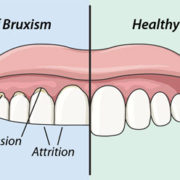
Have you ever woken up in the morning feeling pain in your jaw and the furthest thing from refreshed? These are signs that you could be suffering from bruxism, or chronic teeth grinding that can lead to serious dental issues if not addressed and treated correctly.

Teeth grinding is often thought to occur due to excessive stress levels, but that’s not the only trigger. Some common causes include:

  • Stress or anxiety
  • An abnormal bite
  • Missing or crooked teeth

But you’ve probably never heard that grinding your teeth is a survival method.

When you sleep, your body goes through light and heavy cycles of consciousness. During the deepest parts of sleep, your body engages in processes to repair damage that results in you feeling refreshed the following day, but it also can result in some breathing issues. When you reach the deepest point of sleep, the entire body relaxes, including the heavy jaw which falls back towards the neck. Second, the tongue expands to almost twice its size, further inhibiting the airway. This is called “obstructive sleep apnea,” and the brain responds to this blockage by engaging the jaw to open the airways and to allow you to continue breathing.

The upside is that you can breathe. The downside is that you sleep terribly.

Though teeth grinding is life-saving in some circumstances, it does have negative effects such as:

  • Dull headache after sleeping
  • Tooth damage from wear (fractures, loosening, loss)
  • TMD/TMJ complications
  • Facial changes
  • Severe pain
  • Exhaustion due to never reaching deep sleep

In order to address teeth grinding, it’s important to visit your dentist to see if your bite or missing teeth can be corrected to avoid further grinding. If you do not have missing teeth or an incorrect bite, your grinding might be a result of non-dental problems related to a blocked airway which can be treated with mild lifestyle changes like losing weight or quitting smoking. More aggressive treatment includes visiting a doctor to inquire about Continuous positive airway pressure (CPAP). No matter the cause, teeth grinding is a problem that can lead to serious dental problems and should be addressed as soon as the symptoms persist.

https://lafayettedentistchauvin.com/wp-content/uploads/2017/03/teeth-grinding.jpg 248 500 admin https://lafayettedenti.wpengine.com/wp-content/uploads/2014/07/logo_new.jpg admin2017-05-24 07:43:042017-03-28 13:49:23Teeth grinding causes and treatments
Page 5 of 11«‹34567›»

All Categories

  • braces
  • cavities
  • Childrens dental
  • Dental Conditions
  • dental crown
  • dental hygiene
  • Dental options
  • dentures
  • fluoride
  • Gum health
  • jaw
  • root canal
  • teeth whitening
  • toothache
  • Uncategorized
  • wisdom teeth

General Dentistry

104 Energy Pkwy
Lafayette, LA 70508
(337) 234-2186

CONTACT US
PAY BILL ONLINE

Our Office Hours

  • Monday:7:00am-3:30pm
  • Tuesday:7:00am-3:30pm
  • Wednesday:7:00am-4:30pm
  • Thursday:7:00am-4:30pm
  • Friday:8:00am-3:00pm

New Patient Forms

For your convenience, we invite all new patients to complete our new patient forms online to expedite the paperwork at your first visit.

NEW PATIENT FORMS

Healthy, Beautiful Smiles for a Lifetime

  • • Comprehensive Dental Care
  • • Comfortable, High-Tech Office
  • • Early Morning Appointments
  • • Relaxing Sedation Options
  • • TVs & Blankets in Treatment Rooms
  • • Insurance Friendly
  • • Flexible Financing Options
  • FAQ
  • Contact
  • Sitemap
  • Pay Bill Online
  • Scheduling
  • New Patient Forms
104 Energy Pkwy
Lafayette, LA 70508
Search Search
Scroll to top Scroll to top Scroll to top