The history of braces
 If you think braces are a modern development, think again. Archeologist discovered that braces date back to ancient man over 3000 years ago. Although, a better choice then was not letting anyone know you had crooked teeth. You would end up with what is referred to as ‘mouth appliances.’ That wouldn’t get me excited for my next selfie…
Early history of braces
Archaeologists uncovered mummified remains with metal bands wrapped around individual teeth. They used cord from animal skin (catgut) to bind the metal bands together in attempts to straighten teeth. Installing these devices along with new teeth (dental implants) were often done after death to ensure they looked good enough to enter into the afterlife.
The first recorded attempts among the living were by the ancient Romans. Aulus Cornelius Celsus wrote about his use of hand pressure that involved applying finger pressure to the teeth at regular intervals. Today, many Roman tombs opened up by archaeologists reveal that some teeth of the deceased had a small gold wire that was used to attach the arch wire to the bracket. The wire was bound to the teeth in an effort to force the teeth to move and close off noticeable gaps.
The most important breakthroughs came between 1728 and 1757 with the publication of 2 books by French dentist, Pierre Fauchard and Ettienne Bourdet. The first book titled “The Surgeon Dentist” talked about all facets of diagnosis and treatment of teeth, with an entire chapter on ways to straighten teeth. Fauchard used a horseshoe-shaped device made of precious metal which helped expand the arch, called a “Bandeau”. In 1757, Ettienne Bourdet’s book, “The Dentist’s Art”, also had a chapter on straightening teeth and using mouth appliances. Bourdet was the dentist to the King of France and further perfected Fauchards’ Bandeau. He is the first dentist on record who recommended extraction and the first to scientifically prove jaw growth.
In 1771, John Hunter, a Scottish doctor wrote a book titled “The Natural History of the Human Teeth,” which described dental anatomy in accurate detail. John Hunter was responsible for coining the terms still used today for teeth, such as bicuspids, cuspids, incisors and molars.
Almost 50 years later, in 1819, the first modern braces for teeth were created by Christophe-Francois Delabarre. Using a wire ‘crib’ to help straighten teeth, this marked the beginning of modern orthodontics.
Braces during the 20th century
It wasn’t until the early 1900’s that the term ‘braces’ was officially used. Dentists would individually wrap bands of materials varied around each tooth. They typically used gold, platinum, silver, steel, gum rubber and occasionally, wood, ivory, zinc, copper, and brass. Wooden teeth were worn by many but made famous by George Washington (who actually didn’t wear wooden teeth).
Advancements in the 1970’s
In the 1970’s everything about braces changed. Orthodontists could now bond brackets right onto a tooth with a new dental adhesive and secure the wire to the bracket with colored ties. Wires got a new look as well: more flexible metals, like nickel, titanium and copper made things more comfortable.
Several attempts at hidden or ‘invisible’ braces happened but the techniques never really gave people what they wanted. It would be several decades before invisible braces became what they are today.
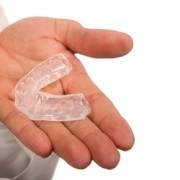
Invisalign was created in 1997 by Zia Chishti. Chishti was a Stanford University graduate with no dental background. She took the concept of the plastic retainer, the same one ancient Egyptians used 5000 years before, and figured out how to use it to straighten teeth, instead of maintaining already straight teeth. Along with Kelsey Wirth, they used 3D imaging software to map out a patient’s mouth and create custom aligners that would slowly transform the wearer’s smile. This eliminated the uncomfortable tightening of wires and more importantly no more ‘metal mouth.’
Invisalign was tested and perfected over 3 years before finally becoming available to the public in 2000. Since then it has grown in popularity over a decade and become the new standard for many patients seeking dental treatment.
So what’s next for braces?
Orthodontists think that the popularity of orthodontic treatment will only increase as both the cost and length of treatment time decreases.
NASA discovered a special heat-activated, nickel-titanium metal discovered that might change the face of orthodontic treatment. It can be molded into a small wire and improve how teeth align in the mouth while cutting down on office time.
There is also a futuristic possibility of 3-D printed braces. This was highlighted at a gadget trade show in Las Vegas.
So as companies develop more precise, high-tech materials and methods, your braces will be on for a shorter period of time, be smaller and less visible, result in less discomfort, and give great results. We’ve sure come a long way from the wrap-around “metal mouth” – and that’s something we can all smile about!
Contact Dr. Chauvin – Your Lafayette dentist if you have more questions!